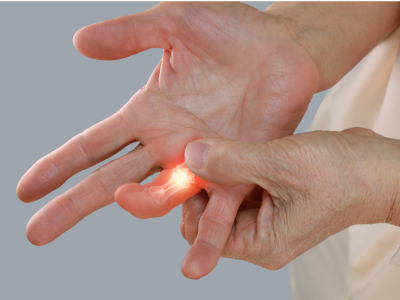
If a finger or thumb catches, clicks, or locks in a bent position before popping straight, you may be dealing with trigger finger. It's a common hand condition, and while it can be uncomfortable and frustrating, it's also very treatable once properly diagnosed. Here's what causes it, who's at risk, and the treatment options that can get you back to full use of your hand.
What Is Trigger Finger?
Trigger finger, medically known as stenosing flexor tenosynovitis, happens when the flexor tendon responsible for bending a finger becomes irritated or thickened, or when the A1 pulley, a small band at the base of the finger that holds the tendon in place, narrows. When that happens, the tendon can't glide smoothly through the pulley anymore.
The result is the condition's namesake symptom: the finger catches, locks, or "triggers" as it snaps straight, sometimes with a noticeable click you can feel or hear. It can affect any digit, but it most often shows up in the ring finger and thumb. Severity varies widely, from mild morning stiffness to a finger that locks completely and has to be straightened with your other hand.
As the largest orthopedic team in Central New York, our hand and wrist specialists at Syracuse Orthopedic Specialists see trigger finger regularly, and we know how to identify the underlying cause and get you on the right treatment path quickly.
What Causes Trigger Finger?
Trigger finger usually develops gradually, from repeated irritation of the tendon and pulley rather than a single injury. Common contributing factors include:
- Repetitive gripping or forceful hand use, such as with tools, musical instruments, sports equipment, or gardening
- Occupations and hobbies that involve sustained or repeated gripping motions
- Underlying medical conditions, including diabetes, rheumatoid arthritis, gout, and hypothyroidism, all of which raise your risk
- Demographics: trigger finger is more common in women and incidence peaks between the ages of 40 and 60
In many cases, there's no single clear cause. The condition can develop even without repetitive hand use or an underlying medical condition, though those factors do meaningfully raise the odds.
Recognizing the Symptoms
Trigger finger symptoms often start mild and build gradually if left untreated. Watch for:
- Stiffness in the finger, especially first thing in the morning
- A popping or clicking sensation when bending or straightening the finger
- Tenderness, or a small palpable bump, at the base of the affected finger in the palm
- Catching or locking of the finger in a bent position
- Difficulty straightening the finger without help from your other hand, in more advanced cases
- Swelling and progressively reduced range of motion
Because symptoms build slowly, a lot of people put off getting it checked out, figuring the stiffness will work itself out. It usually doesn't without treatment, and waiting only gives the tendon irritation more time to settle in.
How Trigger Finger Is Diagnosed
Trigger finger is primarily diagnosed through a clinical exam, and imaging is rarely needed. During your visit, your provider will check the base of the affected finger for tenderness and a nodule, and watch the finger move through active bending and straightening to feel or hear the catch.
A conversation about your symptom timeline, hand use, and relevant medical history helps confirm the diagnosis and pinpoint what's contributing to it. X-rays are occasionally used to rule out arthritis or other joint conditions if the picture isn't clear-cut.
Treatment Options for Trigger Finger
Conservative Treatment
For mild or early-stage trigger finger, conservative treatment is often enough. This typically means cutting back on activities that involve repetitive gripping, splinting the affected finger (often overnight) to rest the irritated tendon, and NSAIDs to bring down inflammation and discomfort.
Corticosteroid Injection
A corticosteroid injection into the tendon sheath at the A1 pulley is considered the most effective non-surgical treatment, particularly when caught early. It reduces inflammation and swelling around the tendon and often provides real, lasting relief, though some patients need a second injection down the line.
Trigger Finger Release Surgery
When conservative treatment and injections don't do the job, or when a finger has been locking for a while, trigger finger release surgery is typically the next step. During the procedure, the A1 pulley is released, or cut, to open up the tunnel and let the tendon glide freely again. typically a quick outpatient procedure which can be done with just local anesthesia, with a high success rate and low chance of recurrence.
What to Expect During Recovery
Recovery timelines depend on the path you take. With splinting or a corticosteroid injection, many patients notice improvement within days to a few weeks. After surgical release, most patients regain full motion within a few weeks, with stitches typically removed 10 to 14 days after the procedure.
Hand therapy or a home exercise program is sometimes recommended to help rebuild full range of motion and grip strength, especially after surgery. Light use of the hand is often possible fairly quickly, but full strength comes back gradually over the following weeks.
If a finger is catching, locking, or bothering you more than it should, don't wait it out. Our hand and wrist team can evaluate what's going on and get you on the right path back to full use of your hand. Request an appointment at a location near you today.