
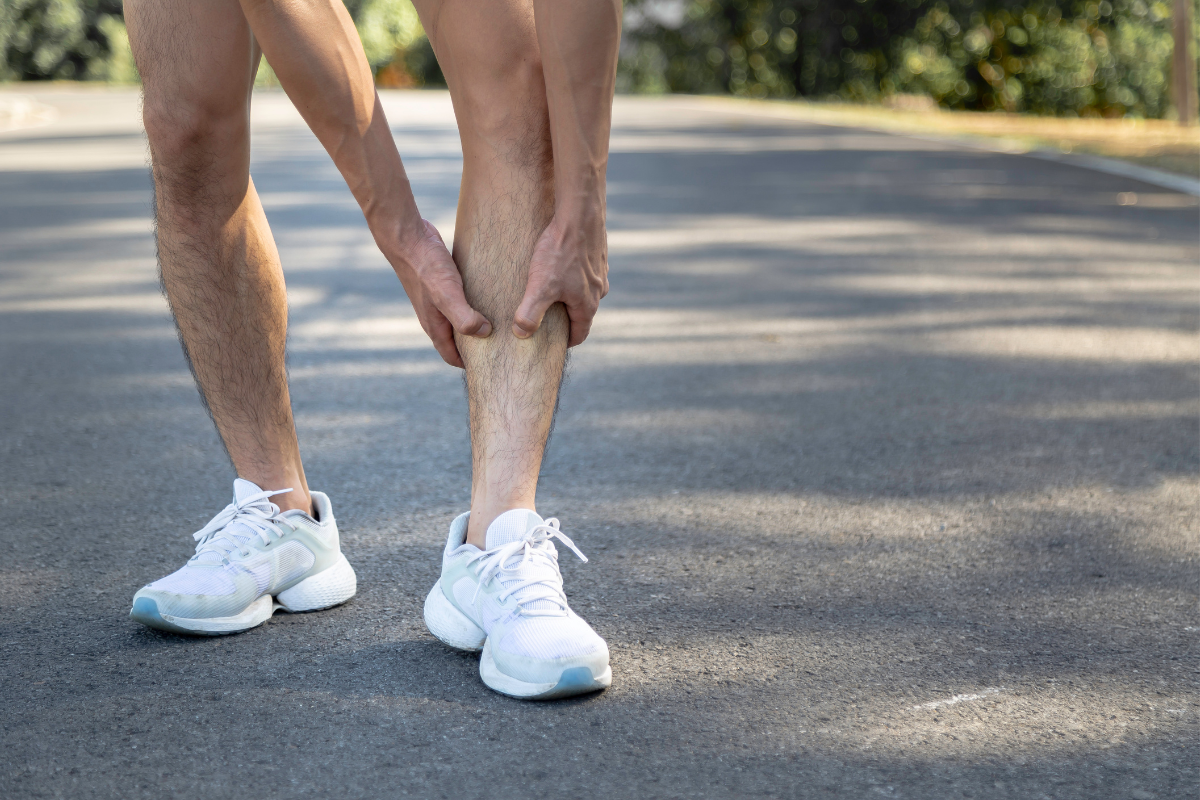
Shin pain is one of the most common complaints among runners and active patients — but not all shin pain is the same injury. Confusing a stress fracture with shin splints can mean continuing to train on a bone that needs rest, with consequences that extend well beyond a missed race. Here is how to read the difference, and when to stop running and get evaluated.
What Is Actually Happening in Each Condition
Both injuries share the same mechanism, repetitive impact loading, and the same population, runners and high-mileage athletes. That overlap is exactly why they are so frequently confused. But they are meaningfully different injuries at the tissue level, and that difference determines everything about how they are managed.
Shin splints, more precisely termed medial tibial stress syndrome, is an inflammatory condition of the periosteum, the connective tissue layer surrounding the tibia. The bone itself is not structurally compromised. This is a soft tissue overload response, most common in runners who have increased training volume too quickly, and it is a condition the body can recover from with appropriate load management.
A stress fracture is a different category of injury. It represents a partial or complete break in the cortical bone caused by repetitive mechanical loading that exceeds the bone's capacity to remodel. In runners, the tibia is the most common site, followed by the fibula and metatarsals. A stress fracture is a structural failure, not a tissue response, and it requires a corresponding level of clinical respect.
Both conditions exist on the same injury continuum. Shin splints that are ignored and overtrained through can progress toward bone stress injury. Understanding where a patient falls on that spectrum is what sports medicine evaluation is designed to determine.
Symptoms: Where the Two Conditions Diverge
Shin Splints
The symptom pattern of medial tibial stress syndrome is characteristically diffuse. Pain runs along a broad zone of the inner tibial border, typically spanning four or more centimeters. It is worst at the start of a run and often improves as the body warms up, a pattern many runners interpret as the injury being manageable and minor. Tenderness on palpation is spread across the medial tibial border rather than concentrated at a single point. Symptoms resolve with rest and return when training resumes. Bilateral presentation is common, with both legs affected to some degree.
Stress Fracture
Stress fracture pain is focal. Tenderness is concentrated at a specific, small location on the bone, and pressing directly on that point reproduces sharp, localized discomfort. Unlike shin splints, stress fracture pain does not improve as a run progresses. It worsens. Pain that begins during walking or daily activity, not just during running, is a significant clinical indicator. Night pain or pain at rest is a red flag that warrants prompt evaluation and should not be dismissed.
A simple clinical screen used by providers is the hop test. Single-leg hopping on the affected side reproduces sharp, pinpoint pain in stress fracture. In shin splints, the response is a more diffuse ache. Localized swelling over the fracture site may also be present. Stress fractures typically present unilaterally, which is another point of distinction from the bilateral pattern common in shin splints.
Risk Factors That Raise the Stakes
Certain patients face elevated stress fracture risk, and recognizing those factors matters for both prevention and treatment planning.
Rapid mileage increase is the most common and most modifiable risk factor for both conditions. Bone remodeling is a slower biological process than training adaptation, and load increases that outpace that process create the conditions for stress injury. Low bone density is a significant amplifier of that risk. Female athletes, patients with a history of disordered eating or hormonal irregularities, and older runners are particularly vulnerable.
The Female Athlete Triad, the combination of low energy availability, menstrual dysfunction, and low bone density, is a well-established risk cluster for stress fracture in active women. Patients presenting with this profile require a more comprehensive orthopedic and medical evaluation beyond imaging alone.
Running surface and footwear compound mechanical risk. Hard surfaces increase ground reaction force with every stride. Worn running shoes reduce shock absorption and transfer more of that force directly into bone. Training errors, sudden increases in frequency, intensity, or distance without adequate recovery time, remain the most direct route to both shin splints and stress fracture across all patient populations.
Why the Distinction Matters for Treatment
The treatment paths for these two conditions diverge significantly, and the consequences of mismanagement are not symmetrical.
Shin splints are managed with relative rest and load reduction, not necessarily complete cessation of activity. Cross-training to maintain cardiovascular fitness while offloading the tibia is appropriate. A gradual return to running is introduced as symptoms resolve. Biomechanical assessment, footwear evaluation, and strength work addressing hip and core stability are important components of a comprehensive plan to prevent recurrence.
Stress fractures require a structured period of protected rest determined by fracture location and severity. Low-risk fractures of the fibula and posteromedial tibia in otherwise healthy patients are typically managed conservatively with rest and protected weight-bearing. High-risk stress fractures, particularly those of the anterior tibial cortex, navicular, and femoral neck, carry risk of complete fracture and potential displacement. These injuries may require surgical fixation and represent orthopedic emergencies that should not wait.
The foot and ankle and sports medicine providers at Syracuse Orthopedic Specialists manage the full spectrum of these injuries. Return to running following a stress fracture is a structured, supervised process, not a decision made independently based on how the leg feels on a given day. Continuing to train on an undiagnosed stress fracture risks complete fracture, displacement, and a recovery measured in months rather than weeks.
When to Stop Running and Get Evaluated
The following symptoms warrant prompt orthopedic evaluation. Do not continue training if you are experiencing any of them:
- Pinpoint tenderness at a specific location on the bone rather than diffuse soreness along the shin
- Pain that worsens progressively through a run and does not improve with warm-up
- Pain during walking or normal daily activity
- Night pain or pain at rest
- Visible swelling localized to the shin
- Any prior history of stress fracture in the same region
Imaging is essential for definitive diagnosis. X-ray is the standard starting point but may miss early stress fractures entirely. MRI is the gold standard for detecting bone stress injury before it is visible on X-ray, and it is the appropriate next step when clinical suspicion is present and X-ray is negative.
Most tibial stress fractures, identified early and managed appropriately, heal completely with no long-term consequences. The variable that most affects outcome is how quickly a patient is evaluated. Shin pain that fits any of the above descriptions should be assessed by a provider, not monitored at home. Contact Syracuse Orthopedic Specialists to schedule an evaluation with a sports medicine or foot and ankle provider.