
 Syracuse Orthopedic Specialists (SOS) is well known for its expertise in joint replacement, but its surgeons and providers also provide quality, non-invasive orthopedic treatment for conditions that don’t require surgery.
What Can an SOS Hip Specialist Do to Help with Hip Pain?
SOS hip specialists work with individuals to provide an accurate diagnosis for hip pain. A complex joint, the hip provides balance and support for your upper body, moves your upper leg, and holds your body weight. SOS providers aim to reduce hip pain and restore and maintain mobility in this important joint.
Is Hip Pain Caused by Hip Bursitis?
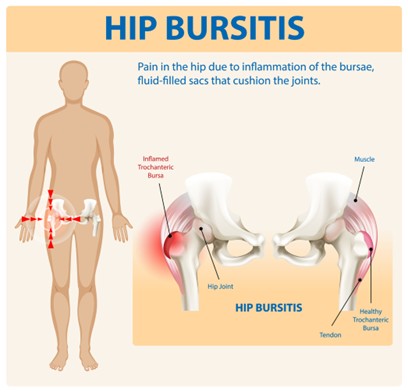
Often, people suffering hip pain have bursitis, which is an inflammation of bursae, fluid-filled sacs distributed throughout the body. These structures function as cushions to reduce friction between bones and soft tissues. The hip contains two major bursae susceptible to inflammation. The most common site for bursitis on the lateral side of the hip; another significant bursa is found on the inner aspect of the hip.
Is Your Hip Pain a Symptom of Hip Bursitis?
Hip bursitis doesn’t cause joint pain, but pain usually extends from the point of the hip to the outside of the thigh area. Hip bursitis is often associated with sharp, intense hip pain in the early stages and may turn into a dull ache across the hip area.
What are Signs That Hip Pain Could Be Caused by Hip Bursitis?
Pain is usually worse at night, when lying on the affected hip. Getting out of a chair, prolonged walking, climbing, or squatting may irritate the hip.
 Hip Bursitis Specialists near Syracuse, NY
"When patients present with hip pain and suspected bursitis, an SOS provider will perform a comprehensive physical examination, looking for tenderness around the point of the hip. They may perform additional tests to rule out other possible injuries or conditions. “There can be many causes of hip pain, and we conduct a thorough investigation with patients to develop an appropriate treatment plan for their specific case,” says David Qunizi, MD, orthopedic surgeon, SOS.
Do You Need Surgery for Hip Bursitis?
Surgical intervention is rarely necessary for hip bursitis. Standard management includes rest, NSAIDS, and icing. Symptoms resolve gradually and patients may gradually return to activity as they progress.
What Treatment Options Are Available for Hip Bursitis?
If pain persists despite initial conservative measures, further interventions such as physical therapy, corticosteroid injections, or the use of assistive devices may be considered. Dr. Qunizi notes platelet-rich plasma (PRP) injections are a new course of treatment he sometimes refers patients to consider, although currently insurance does not cover its cost. “Current research on PRP effectiveness is still evolving although some patients report it has helped speed up their healing process,” Qunizi says. “It’s important to discuss the potential benefits and risks with your physician to determine whether PRP is appropriate for you to help with bursitis."
Can Physical Therapy Help with Hip Bursitis and Hip Pain?
The physical therapists in the SOS Orthopedic & Sports Therapy Department often see patients with hip bursitis. They focus on reducing inflammation and pain using various modalities, then regaining lost motion and strength surrounding the hip. Therapists create plans that progress from gentle stretches and pain-relieving techniques to strengthening exercises as your symptoms improve. The duration of physical therapy varies depending on the hip condition and how consistently the patient works their treatment plan.
Who is Most Likely to Be Affected by Hip Bursitis?
Anyone can develop hip bursitis, but it is more common in women, middle-aged people, and the elderly. Bursitis can arise from overuse from a sport or activity. Other cases arise from an injury to the hip, like falls, bone spurs, or rheumatoid arthritis.
When Should You See a Doctor About Hip Pain or Hip Bursitis?
If you are experiencing hip pain, request an appointment or call (315) 251-3163 for an appointment.
“The hips are like a bridge between the upper and lower body and keeping them healthy and strong is a strong foundation for the body,” said Quinzi.